Receptive Language is the facility to listen and comprehend
communication. Children and individuals with a receptive language disorder
struggle to process language, written or spoken. A receptive language disorder
may result from a traumatic brain injury, stroke, however most causes are still
unknown. While children may suffer from a receptive language disorder this does
not denote low intelligence, most children have average to above-average
intelligence. Symptoms of a receptive language disorder may cause problems with
communication, academic activities, and social interactions but can also include:
- · Trouble following directions
- · Confusion when faced with complicated or long sentences
- · Difficulty with abstract language
- · Difficulty responding to questions
- · Requires extra time to process information
- · Trouble differentiating between sounds
Therapy is provided to help improve the child’s ability to
follow directions and increase their listening comprehension skills. Additionally
support can be given to help differentiate similar sounds, sentence structure,
and word recovery. Furthermore, scenarios are set up to help build vocabulary
development and language in social situations.
Completed Visual
Daily Schedule:
Many teachers, whether they have students with
special needs or not, are turning to visual aids in their daily schedule to
help their visual learners. By attaching a picture to each part of the daily
schedule allows a student who may not be able to read to follow the schedule,
know where they are in their day and what is to follow. This is a GREAT tool to
help students feel independent in an area where they may struggle the must.
“No” Symbol:
By using the “NO” symbol students can see what is not
allowed or ok in different environments without needing to read. The most
common symbol for this is a red circle with a diagonal red line through the
circle. Different examples of this and where they would be found include:
1.
“NO PEANUTS” (Peanut
Free School/Lunchroom/Classroom)
2.
“NO CAMERAS/PHOTOS” (Museum)
3.
“NO FOOD” (Museum,
Clothing Stores)
4.
“NO SMOKING” (Airplane,
Shops, Hospitals)
5.
“NO PETS/ANIMALS” (Restaurants, Grocery Store)
6. “NO PARKING” (Bus
lane, Fire Lane, Loading Zone)


Specific Activity/
Mini Schedule:
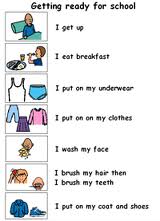
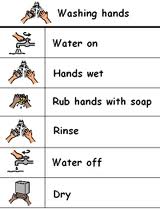
Mini schedules are a type of visual aid used to help break
down and sequence routines into more manageable steps. They are most often
found in the location in which they are used for convenience.
Example 1: Bedtime Routine

Example 2: Morning Routine
Sequential Step
Direction:
Washing Hands:
Brushing Teeth:

Getting Dressed:

Change Symbol:

Activity
Termination Signals:


